












Lewes firefighter Robbie Stephens to run 5K in turnout gear April 30
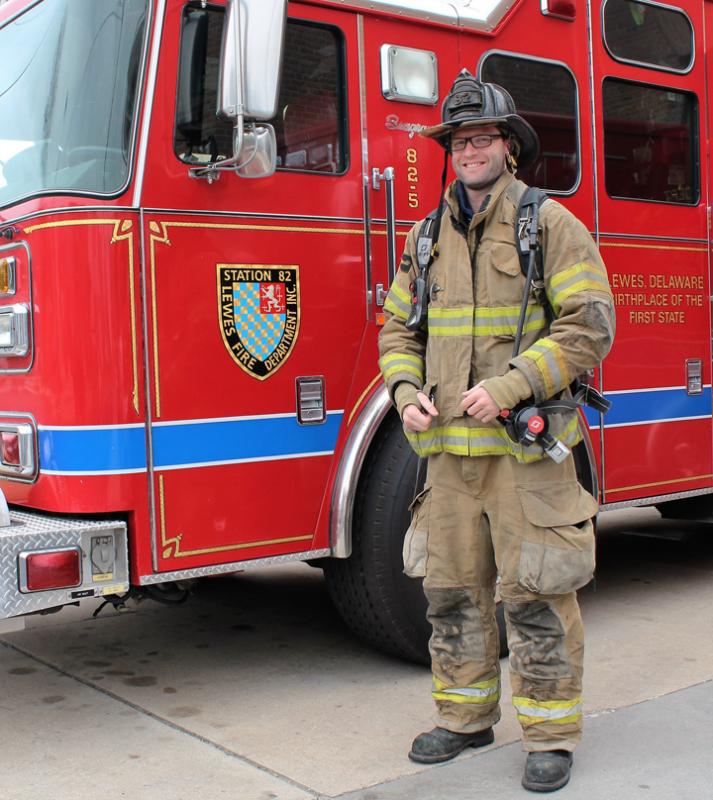
While most runners will be donning a race T-shirt to run in Lewes Fire Department’s second Stop, Drop and Run 5K, LFD volunteer firefighter Robbie Stephens will be stepping into his full turnout gear. Stephens finished first in his age category in the inaugural 5K in 2015, but this year he intends to compete with a bit of a disadvantage.
“Being a volunteer firefighter with Lewes is something I take very seriously. I often work out in my full gear. It helps me to stay in the best possible shape. When I enter a working fire, I know others are depending on me, so I never want to let them down,” said Stephens. “Running this race in my turnout gear is not only a terrific workout for me, but I hope it draws some positive attention to what it takes to operate in our gear.”
A structural firefighter’s uniform is called personal protective equipment, bunker or turnout gear. “Bunker” refers to the days when gear was left by the bedside or bunk; “turnout” refers to the firefighter’s practice of turning their pants over their boots to allow ease of dress - step into boots and pull up the pants in a simple motion.
In total, a firefighter’s basic PPE (helmet, hood, bunker pants, coat, gloves and air pack) weighs about 45 pounds. The PPE is designed to protect from the heat of a fire while allowing firefighters to breathe safely in a life-threatening situation. A typical bunker coat is made up of three layers: The outer layer is constructed with a flame-retardant material such as Nomex or Kevlar. The second layer is made up of a water-repellant material to help keep water off the skin. The innermost material provides thermal protection against intense heat.
The breathing system worn is called a self contained breathing apparatus or SCBA. It consists of a carbon-fiber composite air tank which holds approximately 45 minutes of high-pressure air. A regulator reduces the pressure to a breathable level. A built-in safety system will alert other firefighters if one is trapped or hurt. The SCBA system allows air tanks to be replaced easily and quickly without taking off the pack.
Inside a structure fire, one rotation (mostly depleting an air bottle) has been compared to running two miles without a break. A firefighter who exercises and trains regularly can often stretch his or her air supply for a longer duration.
The heavy leather boots complete with steel shanks and toes are 16 inches tall and are designed primarily for protection, not mobility. Stephens will be opting for his running shoes. He says, ”No need to have blisters. My regular job keeps me on my feet.”
The second Stop, Drop and Run 5K, presented by the Lewes Fire Dept. Auxiliary and Races2Run will be held Saturday, April 30, starting and finishing at the Lewes Fire Station at 347 Savannah Road. The 5K course for runners and walkers, is a fast and flat residential route. LFD Auxiliary mascot Sparky will announce the Kiddie-K, free for children 8 and under.
The Kiddie-K will start at 8:15 with the 5K commencing at 8:30 a.m. For more information, go to www.races2run.com/events/stop-drop-run-5k or www.lewesfire.com.
A post-race party will immediately follow with food from local eateries and beer for those 21 and older. Family-friendly activities include face painting and fire emblem tattoos. Firefighters, the fire prevention team and Sparky will be present to show children of all ages the fire trucks and firefighting equipment. Non-runners can attend the after-race party for $5 on race day.
For more than 200 years the men and women of theLewes Fire Department have run in when others run out. Since 2009, the LFD once again boasts an auxiliary which maintains the same mission: to serve. For more information, email LFDAUX@gmail.com or call 302-329-9396.